
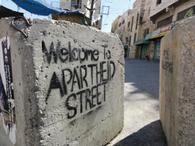
The day when the so-called ‘Jewish State’ bill—the basic law defining Israel as the ‘nation-state of the Jewish people’—takes effect will be day one of the countdown towards the end of the Israeli apartheid regime. »
Who we are
Tarabut seeks to build social alliances for change, to forge alliances that bring together the dispossessed and the oppressed in Israel through involvement in social struggles. Hence the name ('come together', 'associate' in Hebrew and Arabic): We seek to bring together people, not organizations, to think together without dogmatic certainties, and to work for social change.
The focus of Tarabut's activity is local. Very few texts on our website are currently available in other languages than Hebrew and Arabic. We hope to make more texts available in the future.
For more information, please Contact us: tarabut@gmail.com
Links
Solidarity with the Palestinian Political Prisoners in their Just Struggle!
A joint public statement of politcal organizations from both sides of the green line to support the Palestinian Political Prisoners in their Just Struggle, initiated by the left forces in Hebron and Hithabrut-Tarabut. "Our immediate demand from the Israeli authorities is to free all administrative detainees, both those on hunger strike and those who are not. We call for an end to the policy of administrative detention as a method of arbitrary detention, which results in the jailing of people without trial, on the basis of confidential evidence and without providing a reason and justification for the detainees and their attorneys. This practice contravenes fundamental standards of justice and represents an example of Israel’s blatant disregard of international conventions and norms anchored in international humanitarian law and international human rights conventions."
An Israeli Spring? Critical reflections on the past and future of the Israeli mass protests
Last summer's social protests exposed the cracks and contradictions of the current economic and political order. The voices of the protests were not limited to those of the traditional middle classes. These contradictions are opportunities that call us to promote change and not to stand idly by. A critical overview of the protest, with the aim of contributing to its renewal.
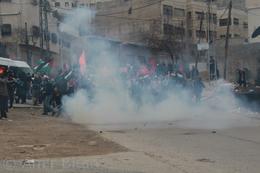
Have you ever heard commercials in the middle of a demonstration, while breathing tear gas? There are some corporations who do not give up even a single valuable moment of a listening audience, even demonstrators under a tear gas attack...
In February 2010, Israel's minister of foreign affair, head of the right-wing party "Yisrael Beiteinu”, proposed requiring a loyalty oath as a condition of Israeli citizenship. Those who refuse - Arab or Jewish - would have their citizenship revoked. Read our own version...
The Making of a Social Activist

Reuven Abergil, one of the founders of the Israeli Black Panthers, the social movement who shook Israeli society at the beginning of the 1970s, now a member of Tarabut-Hit’habrut, talks about growing up in a poor neighborhood in Jerusalem and the beginning of the Black Panthers movement in Israel.
The day when the so-called ‘Jewish State’ bill—the basic law defining Israel as the ‘nation-state of the Jewish people’—takes effect will be day one of the countdown towards the end of the Israeli apartheid regime. »

The current conflict between Israel and Hamas and other Palestinian forces in Gaza does not merely reflect the current politics of the rulers of the two societies. It has deeper roots that go back to the wounds of 1948 - and Moshe Dayan knew this well »

The journalist Raviv Drucker published an internal document from the financial department of the Jewish National Fund on his blog. The document details how much the JNF spends on "development initiatives" for settlers in the occupied West Bank. »
On Sunday, January 16th, 2011, the Israel Lands Administration (ILA) accompanied by a heavy police presence destroyed the Bedouin village of Al Arakib for the 9th time since its total destruction in July 2010 »
An unrecognized village, Dahmash in the middle of Israel: No electricity, no health services, public transport, rubbish removal, or sewage. The residents live under constant threat of demolition and eviction. Tarabut activists have taken up their cause: to stop the demolitions and work toward achieving full recognition for Dahmash. »
How much do the masters pay the natives in the occupied territories? At the Solor factory – 90, 120 NIS a day. Where? In a fortified compound between the Separation Fence and Tulkarem. How roadblocks and fences manufacture manpower for exploitation? »
Arab and Jewish cousins go to the movies in Tel Aviv’s most central mall, August 2009. »
Reuven Abergil, one of the founders of the Israeli Black Panthers, the social movement who shook Israeli society at the beginning of the 1970s, now a member of Tarabut-Hit’habrut, talks about growing up in a poor neighborhood in Jerusalem and the beginning of the Black Panthers movement in Israel. »